FIRST-PARTY PRODUCT
CrewGap is Craig Rouse’s own developing product. This case study demonstrates first-hand product, workflow, software, and website work; it is not presented as an independent client result or paid-customer testimonial.
CrewGap is Craig Rouse’s own developing software product, not an independent paying-client engagement.
The product started with a problem I had seen firsthand for years.
I grew up around a sheet metal shop and have spent more than 20 years working around construction, shipyards, communications, and field operations. I still work in the field as a foreman, so I have seen the disconnect that can develop between the people managing a job from the office and the people actually doing the work in the field.
The office needs accurate time, schedules, reports, job information, equipment records, and visibility into what is happening. The field needs something fast and practical that does not create even more paperwork.
That became the idea behind CrewGap: close the gap between the field and the office.
The challenge
The goal was not to build another oversized construction-management platform filled with features crews would never use.
CrewGap needed to bring the important parts of day-to-day operations together while still making sense to someone standing on a jobsite with a phone in their hand.
That meant thinking through how employees, foremen, superintendents, project managers, payroll staff, and owners would each use the same system differently.
It also meant building around real construction workflows instead of forcing construction companies to change the way they operate just to fit the software.
Building the CrewGap application
CrewGap grew into a complete browser-based construction operations platform.
The application brings together job and project control, crew management, employee time, approvals, payroll preparation, scheduling, daily field reports, ticket work, safety documentation, equipment, fleet management, employee qualifications, announcements, and workforce management.
One of the bigger parts of the project was permissions. Not everybody in a construction company should be able to see or change everything. CrewGap was built around individual accounts and permission-based access so an employee can see what they need, a foreman can manage the people and work they are responsible for, and management can maintain broader operational visibility.
We also spent a lot of time on the smaller details that determine whether software is actually usable: sorting jobs, moving employees between crews, reviewing time without digging through long pages, tracking PTO and sick balances, handling equipment rates, managing vehicle assignments, and keeping field records tied to the correct job.
Those details came from looking at CrewGap as someone who would actually have to use it during a workday—not simply as someone building software.
Testing and refining the platform
CrewGap was not built once and called finished.
The application went through repeated development builds, corrections, regression testing, clean-install testing, browser testing, database checks, permission testing, backup and restore checks, security reviews, and release verification.
We tested areas such as tenant separation, user permissions, uploads, plan limits, employee records, time workflows, backups, and sensitive administrative controls.
That process also uncovered issues that needed to be corrected before treating the platform as production-ready. Instead of ignoring those findings, they became part of the development process.
For a custom application handling employee, payroll, job, and operational information, that kind of testing matters just as much as what the interface looks like.
Building the CrewGap website
The software was only half of the project. CrewGap also needed a website that could explain a fairly large platform without overwhelming the visitor.
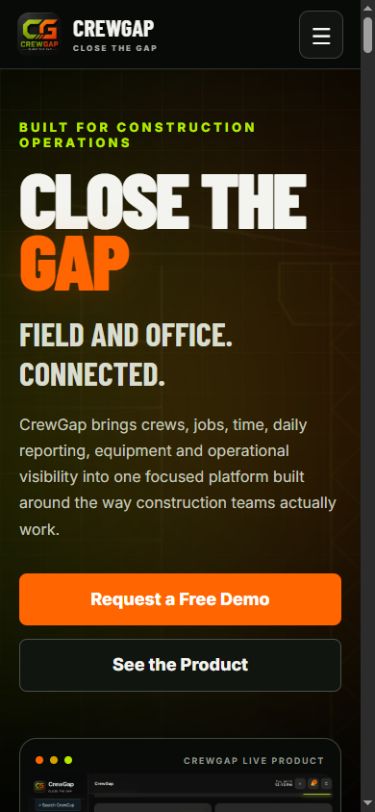
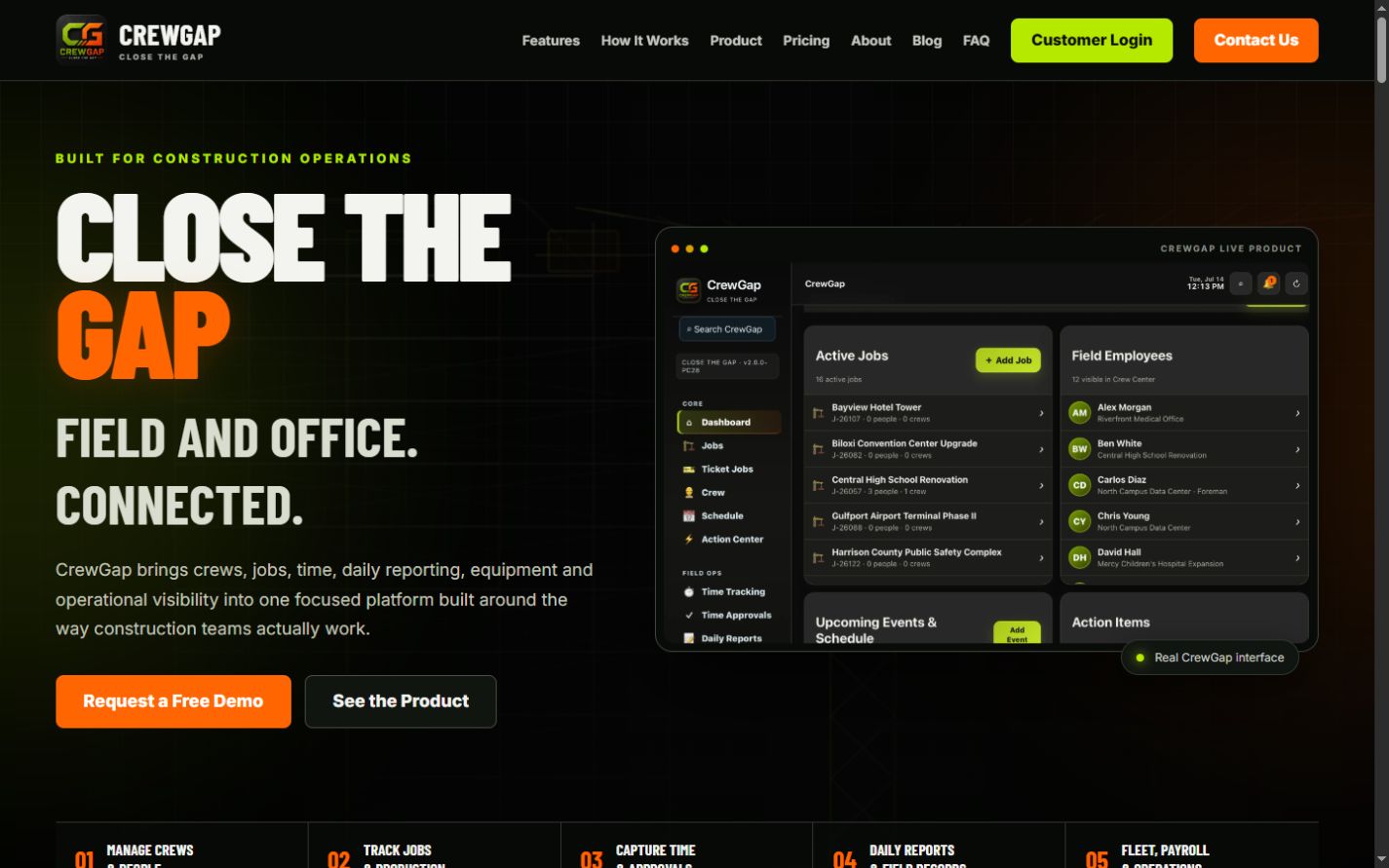
CrewGapApp.com was built around the same simple message as the product itself: “Close the gap. Field and office. Connected.”
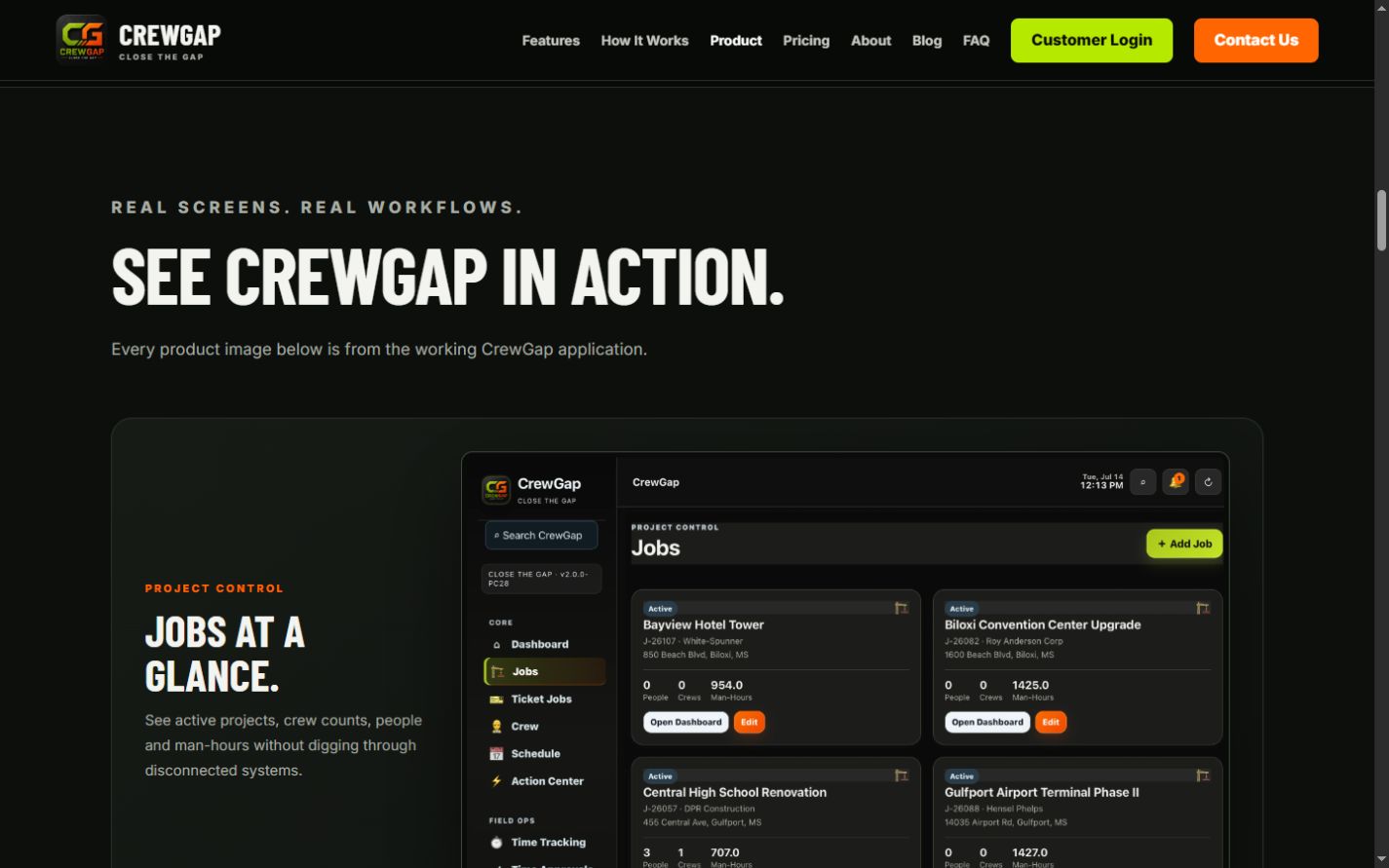
The website uses actual CrewGap application screenshots instead of generic software graphics. Visitors can see the real Jobs screen, Crew Center, Employee Management, Daily Reports, Fleet, payroll workflow, job labor tracking, and other parts of the platform before requesting a demonstration.
The site also includes the product explanation, pricing, setup options, security and permission information, FAQs, demo and contact workflow, mission statement, product screenshots, and CrewGap Field Notes content.
The website was designed responsively so the product can be researched from a desktop or phone, just as the application itself is designed for both office and field use. The public site presents CrewGap as a focused construction-operations platform connecting jobs, crews, time, daily reporting, equipment, fleet, payroll workflows, and operational visibility.
The outcome
CrewGap became much more than an idea for an app.
We took a problem that exists every day in construction, mapped the real workflow behind it, designed the database and application logic, built the user interface, created the permission system, developed the operational tools, tested and hardened the software, and then built an entire public-facing website around the finished product.
There is not a made-up percentage or marketing number attached to this case study. CrewGap is still its own developing software product. The result we can show is the product itself.
It demonstrates the first-hand product and website experience behind an in-house project without presenting custom software development as a service Rouse Innovation currently offers.
CrewGap was built around construction because that is where the original problem came from. Its role in this portfolio is to show the product thinking and practical field experience that informed the public website and its explanations.
Project views